By clicking “Accept All Cookies”, you agree to the storing of cookies on your device to enhance site navigation, analyze site usage, and assist in our marketing efforts. View our Privacy Policy for more information.



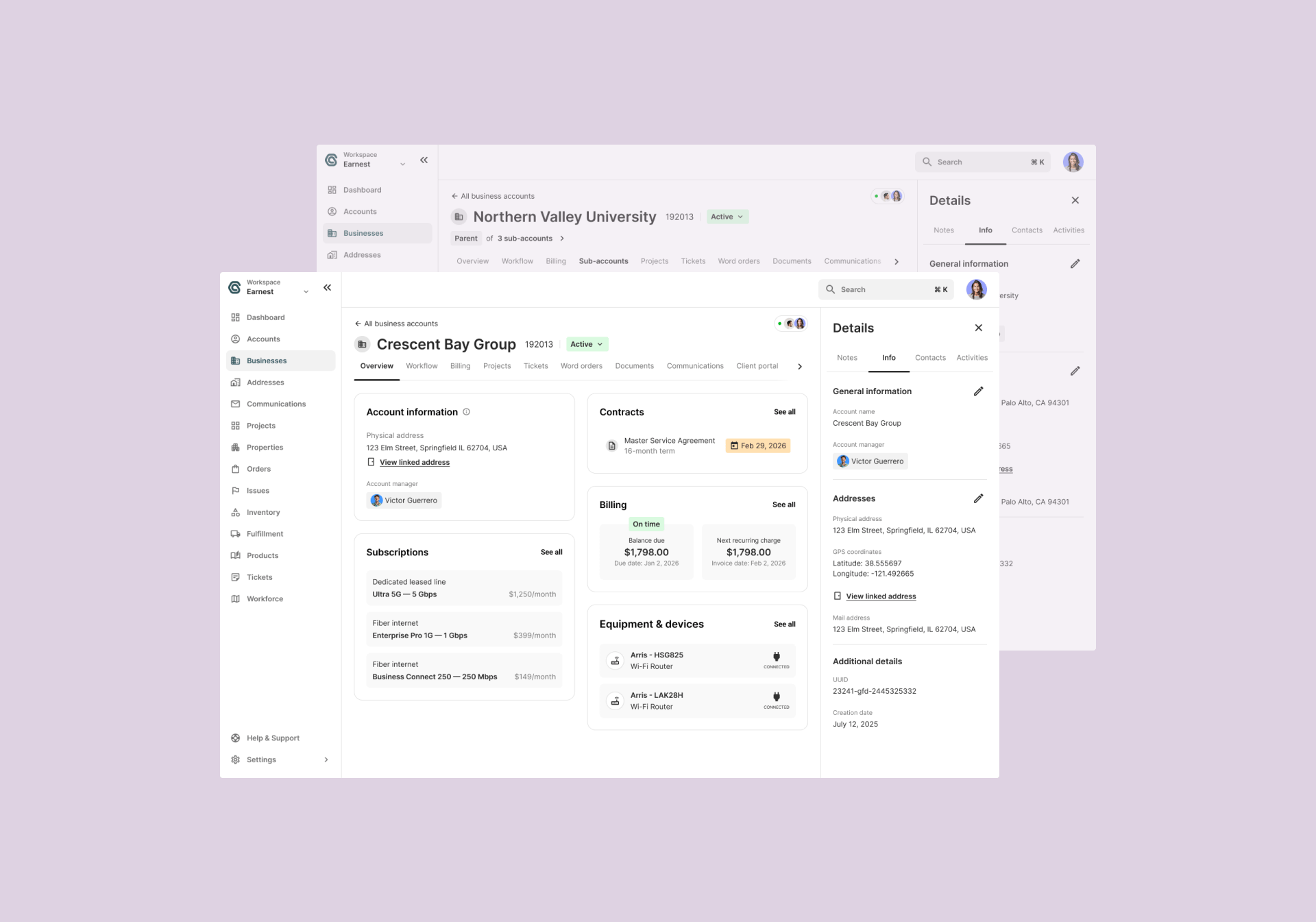
Today we are excited to announce the launch of gaiia’s new B2B module, a purpose built system for managing business accounts, enterprise customers, and project based service delivery. This release positions gaiia as the first modern OSS and BSS platform that allows ISPs to manage residential, MDU, and business operations inside one unified system.
As more ISPs expand beyond residential and into business and enterprise services, they need operational software that can support complex multi-location businesses, project-based deployments, account managers, contract renewals, and construction workflows. Until now, most providers have relied on spreadsheets, general-purpose CRMs, or expensive legacy enterprise platforms that are slow to configure and disconnected from network operations.
The new B2B module changes this by giving ISPs a complete commercial operations layer that works seamlessly with gaiia’s billing, workforce, network, product catalog, and customer portal.
Commercial operations work very differently from residential. These customers have multi-site footprints, negotiated contracts, project-based delivery, renewal management, and complex product catalogs that include DIA, transport, dark fiber, and voice.
ISPs today face several challenges:
ISPs want a single operational system that can support residential, MDU, and business customers. With this release, gaiia delivers exactly that.
At the core of the new B2B module is a dedicated Business Account entity. This new account type is designed specifically for the workflows and data structures required by enterprise operations.
Business Accounts include:
This new entity creates a clear separation between residential and business workflows. ISPs can manage retail and enterprise accounts in parallel without forcing mismatched workflows into a single account structure.
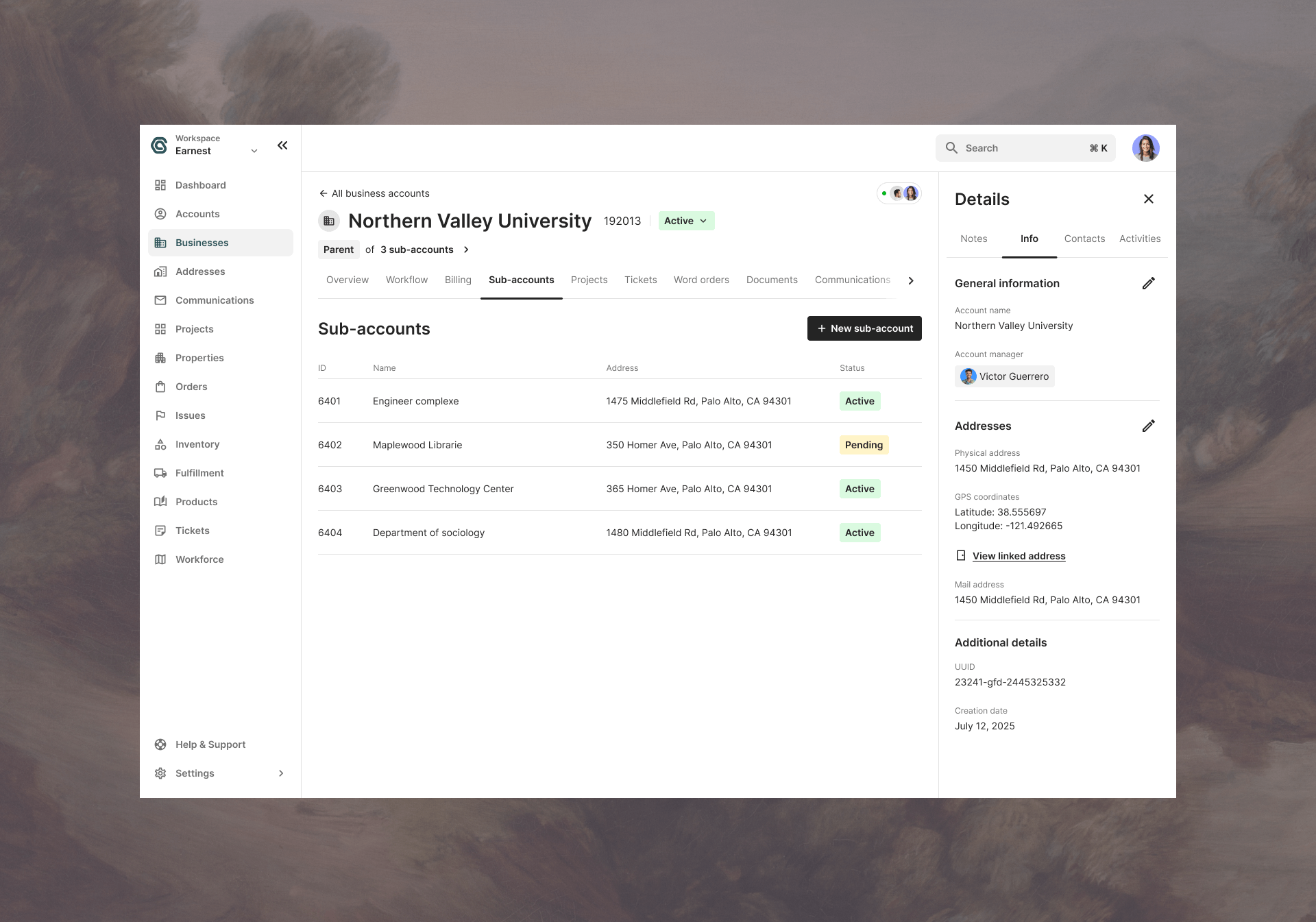
Many business customers operate across multiple locations, departments, or business units. To support this, Business Accounts include a flexible hierarchy model that allows ISPs to create parent accounts and attach any number of sub-accounts beneath them.
This structure makes it easy to manage multi-site customers, breakout billing or service delivery by location, and maintain clear visibility across an organization’s full footprint. Parent accounts consolidate renewal dates, contract information, MRR, and project activity, while sub-accounts track site-specific services, contacts, and operational details.
The hierarchy ensures that ISPs can manage complex business relationships without losing clarity or creating duplicate records, and it improves reporting by giving leadership teams a unified view of enterprise customers.
Business Accounts introduce a purpose-built CRM layer that includes:
This gives account managers a complete operational view of each business customer.
Business accounts include a dedicated field for Account Manager assignment, complete with:
ISPs gain a simple way to manage ownership, measure performance, and organize commercial territories.
Business accounts integrate directly with existing gaiia modules:
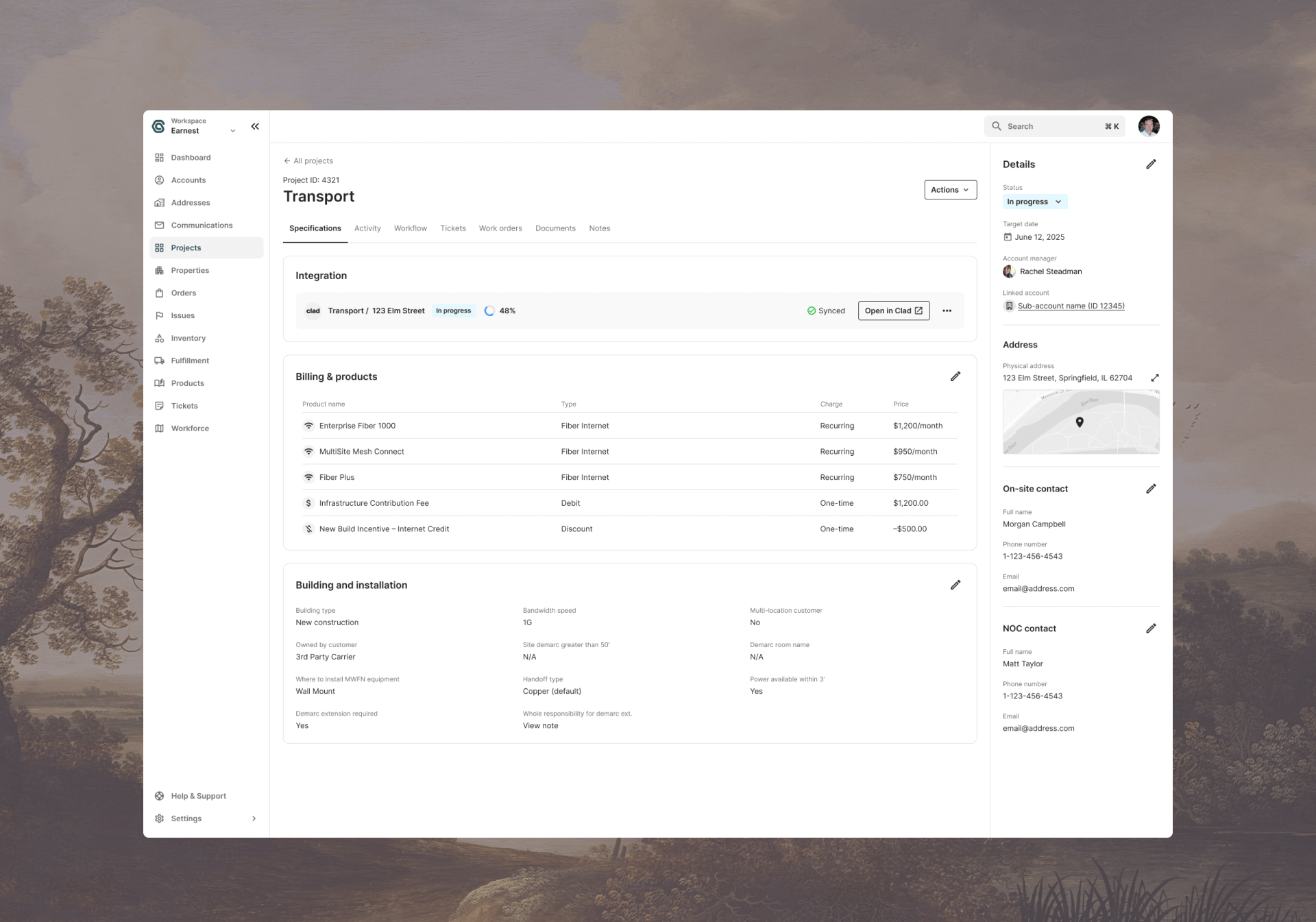
Business service delivery is project-based. DIA, transport, dark fiber, voice, and multi site connectivity all require coordinated progress across multiple teams.
To support this, gaiia is introducing Projects as a new core entity. Projects will allow ISPs to:
Each project template can be customized for the specific requirements of DIA, Transport, Voice, or custom commercial services.
gaiia will integrate with Clad to give ISPs complete visibility into construction progress. Users will be able to:
This eliminates duplicate data entry and connects construction teams with account managers and leadership.
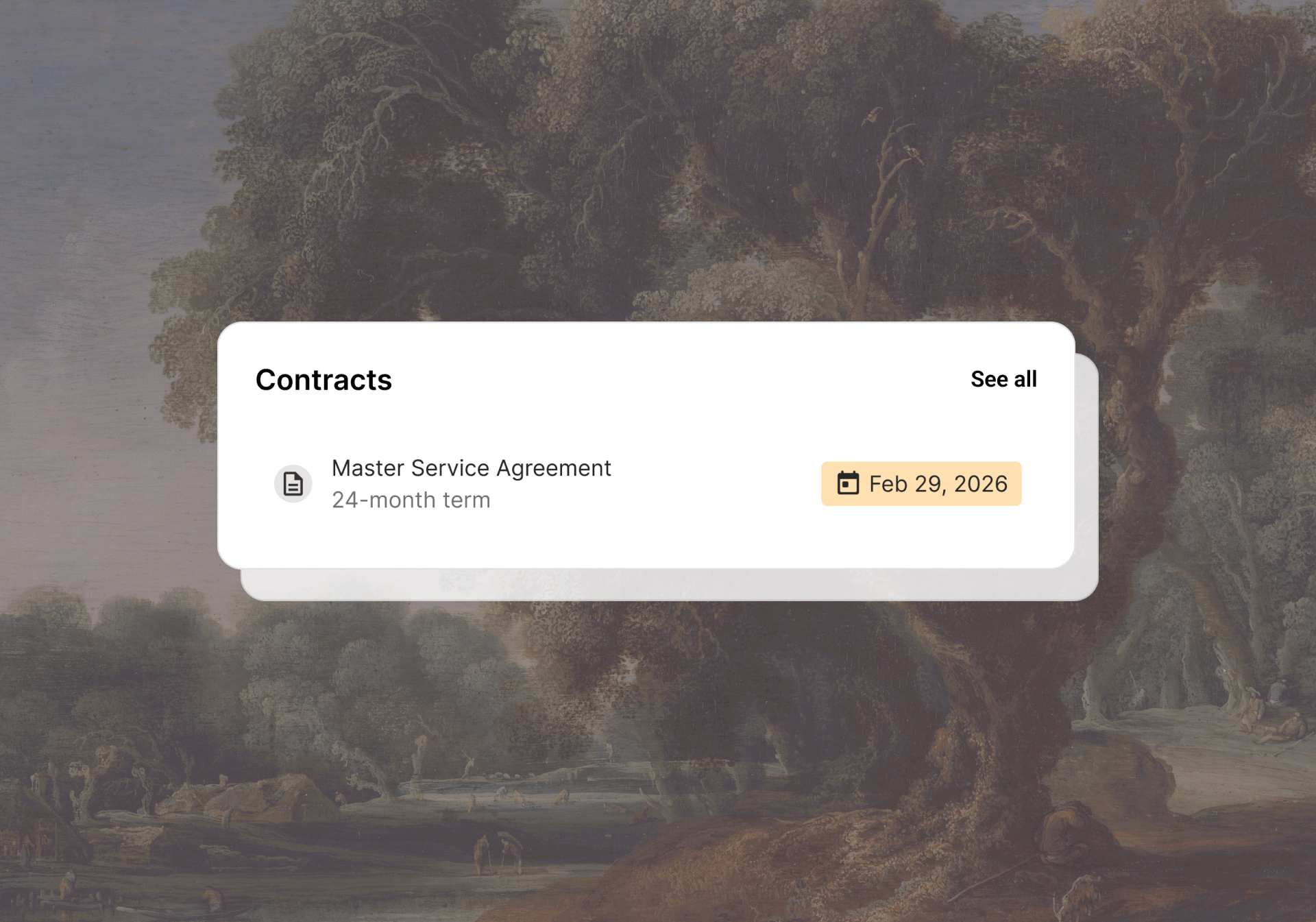
The B2B module introduces improvements to gaiia’s contract manager, including:
This gives ISPs reliable renewal management and clean historical data.
Supporting commercial customers is essential for ISPs that want to grow across all business lines. With the launch of the B2B module, gaiia becomes the first modern OSS and BSS platform that unifies Residential, MDU, & Business accounts in one operational system.
This reduces operational overhead, increases automation opportunities, improves reporting, and strengthens customer experience across all segments.
It also positions ISPs to win higher-value enterprise deals, accelerate renewals, and modernize their entire operating environment.
January 7, 2026