By clicking “Accept All Cookies”, you agree to the storing of cookies on your device to enhance site navigation, analyze site usage, and assist in our marketing efforts. View our Privacy Policy for more information.
How Direct Communications launched mobile with gaiia
As broadband markets become more competitive, CSPs are looking for ways to grow revenue without adding operational complexity. Mobile represents a natural extension of connectivity. Customers already trust their internet provider to keep them connected at home, and many are increasingly willing to consolidate their wireless service with the same provider. For Direct Communications, launching mobile was not just about adding another product. It was about expanding revenue, increasing customer lifetime value, and strengthening retention while maintaining operational simplicity.
Building a new brand without building a new stack
After migrating its broadband operations from a legacy OSS/BSS to gaiia in 2025, Direct Communications modernized the operational foundation supporting both its competitive broadband services and regulated ILEC business. With a modern subscriber experience platform now in place, the team was able to introduce mobile as a natural extension of the same system rather than layering on a separate platform. Because the operational foundation was already established, the team moved from kickoff to launch in approximately two months without custom development.
Expanding revenue without adding systems
For many ISPs, adding mobile introduces a new layer of complexity. Separate billing systems, disconnected workflows, fragmented customer experiences, and additional tools for CSRs can create more strain than growth. Direct Communications wanted the opposite. The goal was to introduce a new revenue stream while keeping one OSS/BSS, one billing system, and one interface for customer service representatives.
By leveraging gaiia’s unified platform, mobile was configured directly within the existing product catalog and subscription structure. CSRs did not need to learn a new system. Mobile lives alongside broadband in the same dashboard, using the same logic and operational framework.
This matters because operational simplicity scales. When a new product can be launched inside the same system that already powers the business, growth becomes additive rather than disruptive.
“The biggest advantage was being able to manage mobile within the same platform as our broadband business. We avoided stitching together new integrations, which reduced risk on the operational side while ensuring customers experience it as one unified service.”
Tim May
CEO, Direct Communications
Embedded in the checkout experience
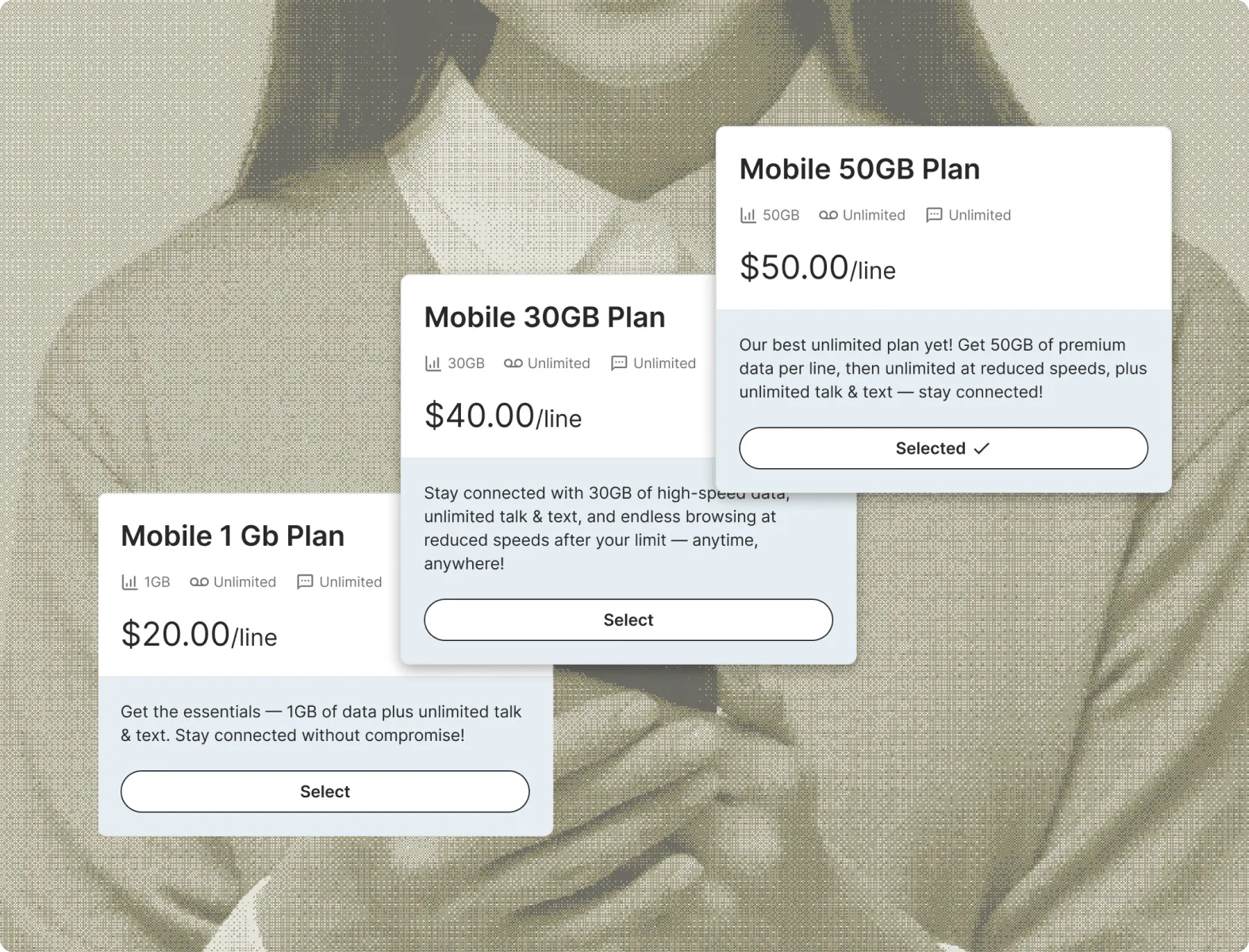
Direct Communications’ mobile offering is fully integrated into their online checkout (powered by gaiia). When customers sign up for internet service, they can add a mobile plan in the same flow. It appears as a natural extension of the connectivity purchase rather than a separate journey. Within the checkout, customers can:
Select a mobile plan while signing up for internet
Bring their own device (BYOD)
Port their existing number
Receive eSIM compatibility confirmation directly within checkout
For CSPs, this is powerful. The checkout moment is where customers are already thinking about connectivity. Offering mobile at that exact moment increases attach rate potential and average revenue per user without requiring additional marketing funnels or separate acquisition campaigns.
Automated workflows across the mobile lifecycle
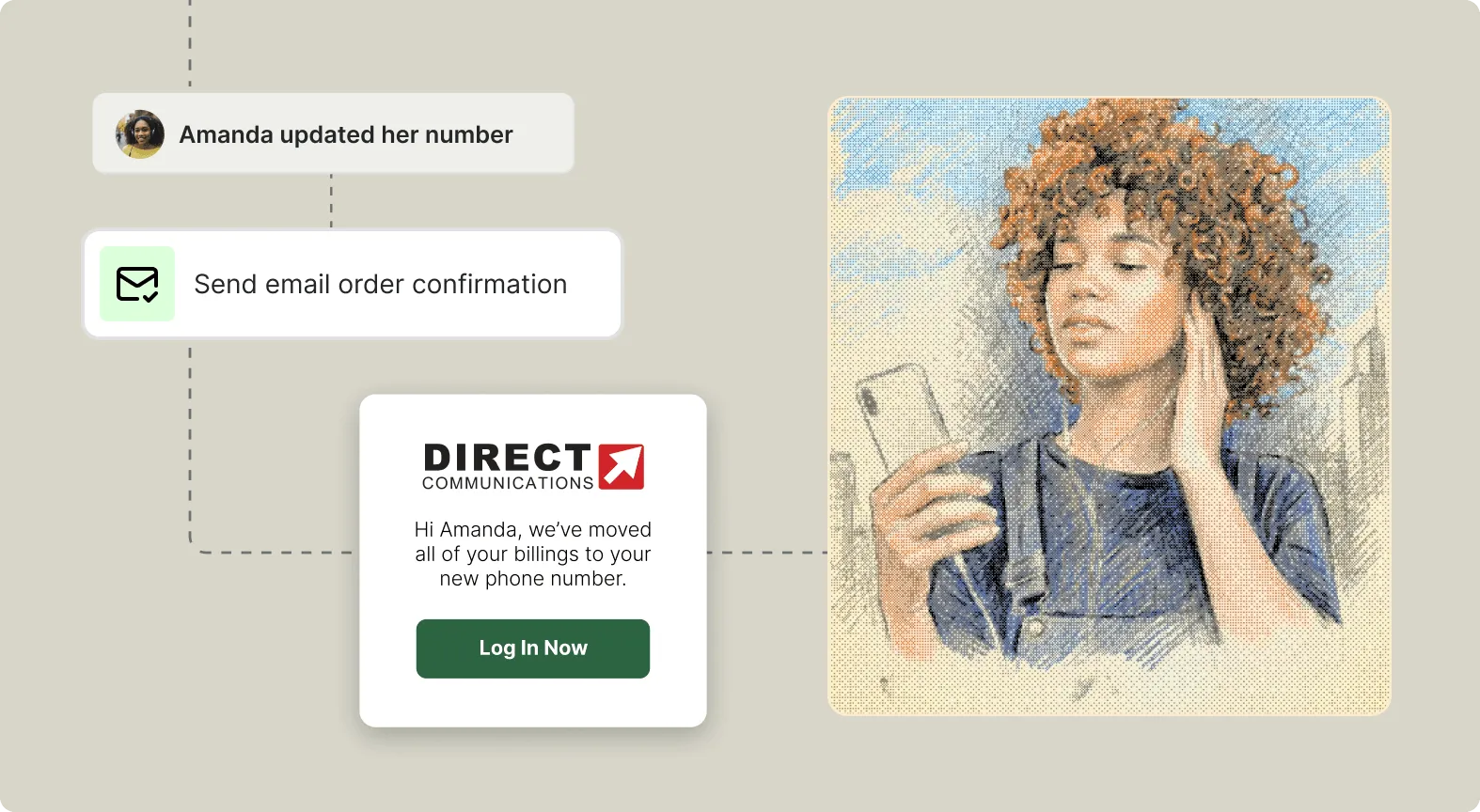
Behind the scenes, mobile services are powered by gaiia’s workflow engine. Activation, deactivation, and plan modifications run through automated workflows inside the same framework that manages broadband provisioning and service changes. There is no manual coordination between systems and no duplicate data entry. When a customer ports a number or activates service, those processes are handled within the same operational environment.
One portal, one experience
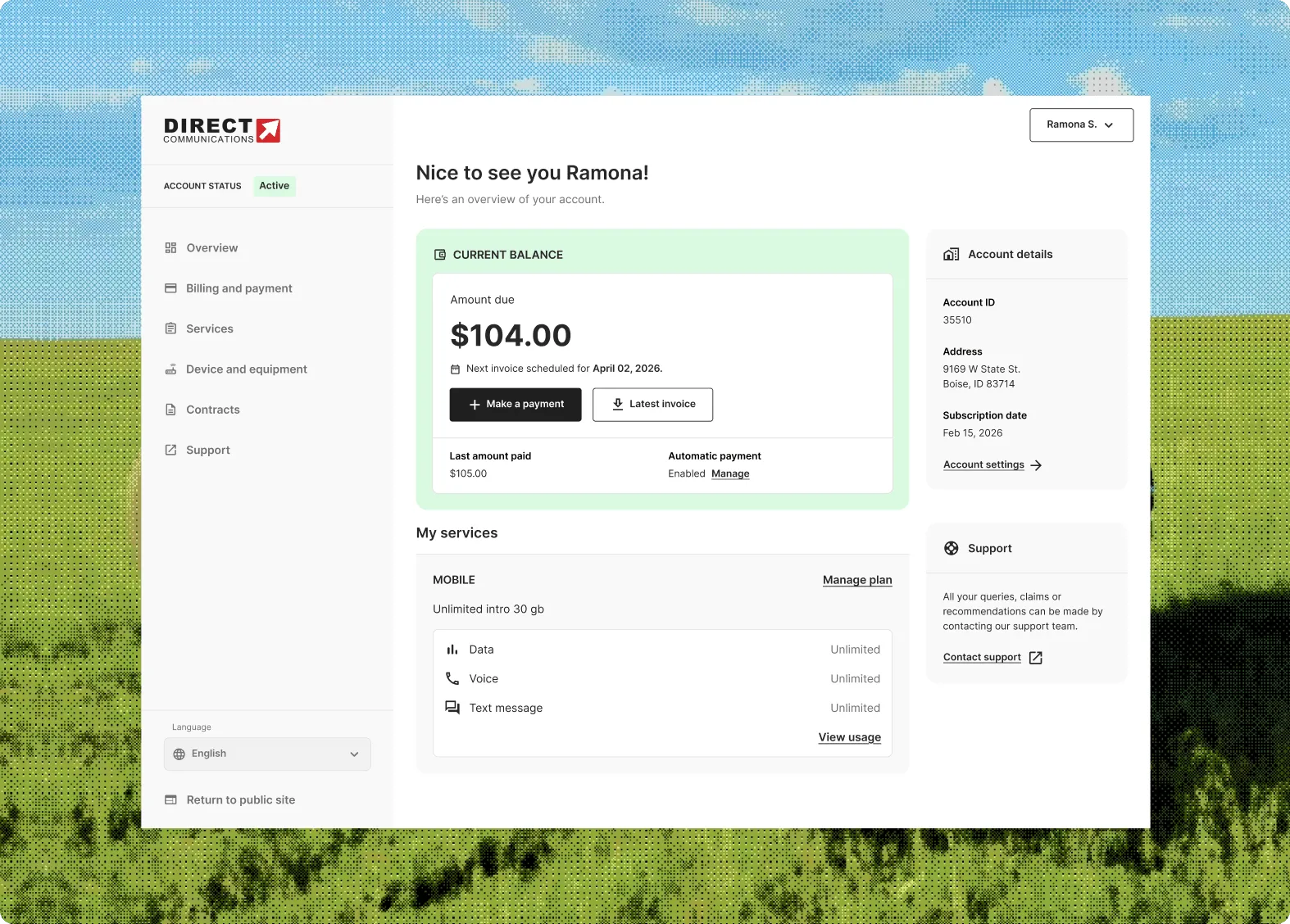
From the customer perspective, mobile feels like a natural extension of their existing services. Within the Direct Communications customer portal, subscribers can view their mobile plans alongside internet services and make modifications in the same interface.
Consistency reduces confusion. Customers do not need to navigate separate logins or different account environments. Everything is managed in one place.
Unified billing and prepaid logic
A major differentiator of the launch is unified billing. Customers receive a single invoice that includes both internet and mobile services. This is often one of the biggest technical hurdles in launching mobile. Separate systems typically generate separate invoices, which can create friction and confusion.
Why this matters for ISPs
Mobile represents one of the most compelling adjacent revenue opportunities for broadband providers. Customers already look to their ISP for connectivity. Adding wireless allows providers to deepen that relationship, increase ARPU, and improve retention through bundled offerings. Historically, the barrier has not been demand. It has been complexity. Direct Communications’ approach demonstrates a different model. By launching mobile with gaiia, they were able to:
Add a new recurring revenue stream
Increase product depth without increasing system count
Maintain a single operational interface for CSRs
Deliver a seamless checkout and portal experience
Unify billing across services
Complete implementation in roughly 60 days
Direct Communications’ mobile launch shows how modern OSS/BSS architecture can unlock new service categories without slowing down the business. By keeping checkout, workflows, billing, and customer management inside one system, they turned mobile into a natural extension of their broadband offering rather than a parallel operation.