By clicking “Accept All Cookies”, you agree to the storing of cookies on your device to enhance site navigation, analyze site usage, and assist in our marketing efforts. View our Privacy Policy for more information.


Track every router, ONT, and modem from your warehouse shelf to a subscriber's home and back again. Zero spreadsheets required.
Book a demo
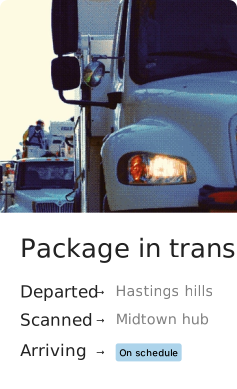

Your hardware lives in a lot of places: warehouses, technician trucks, retail counters, and subscriber homes. gaiia tracks all of it using a location and zone structure you define yourself.

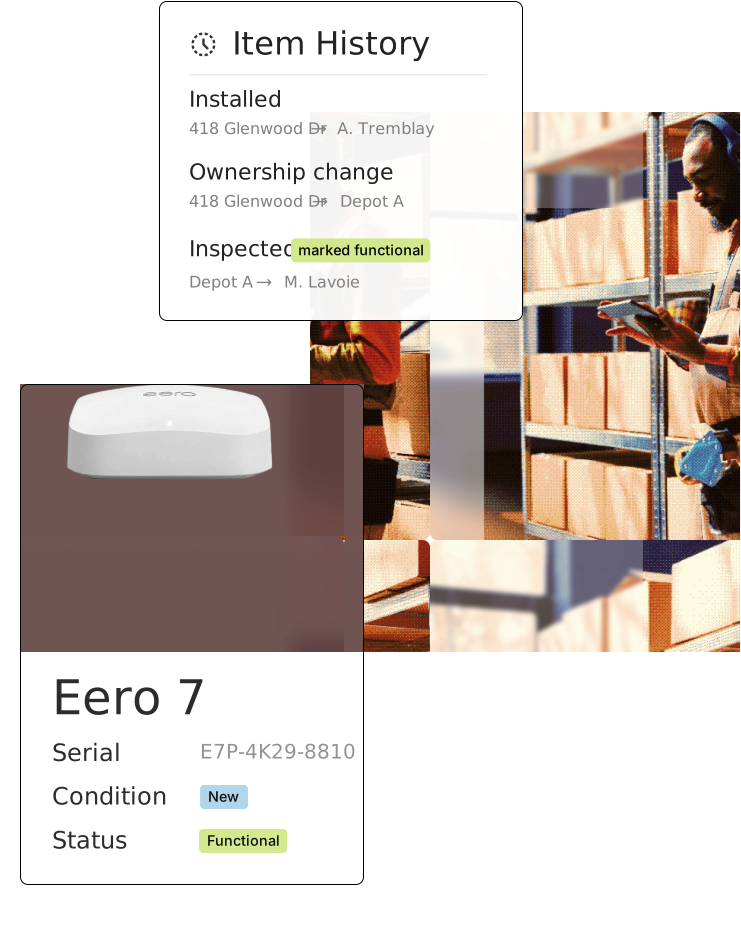
Every unit in gaiia carries a permanent record (Serial number, MAC address, FSAN). Import whatever identifiers your vendor provides and search by any of them instantly. The full movement history travels with the device: who touched it, where it went, and when.
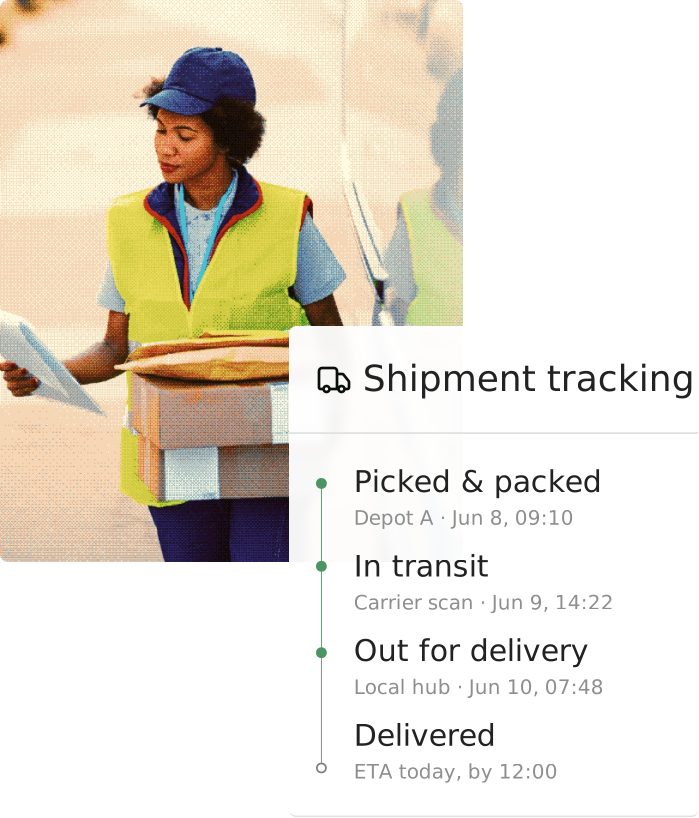
Ship via UPS or Canada Post with label generation built in. Set fulfillment rules per order type, location, and product so every shipment follows a consistent path from warehouse to doorstep.
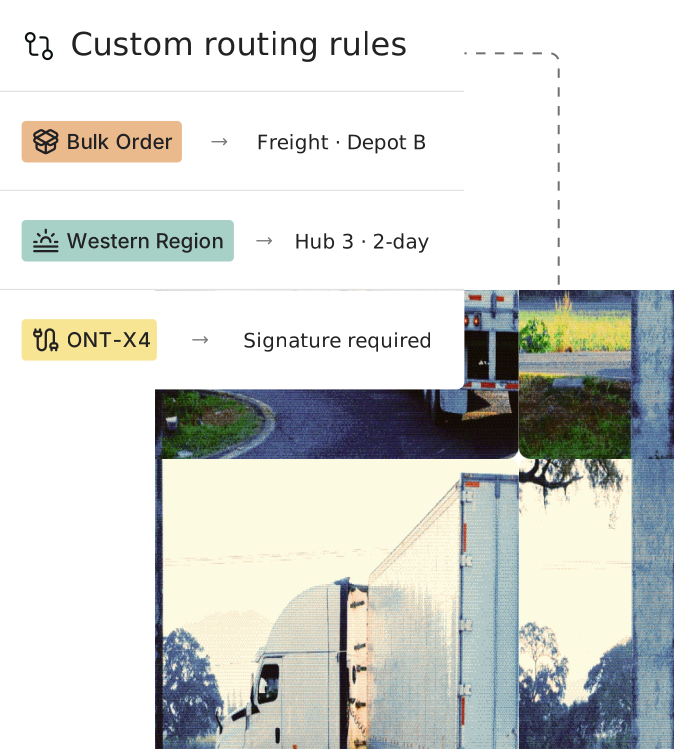
Fulfillment rules adapt to how your operation works. Configure different workflows for different order types, locations, and products so every shipment is handled consistently.
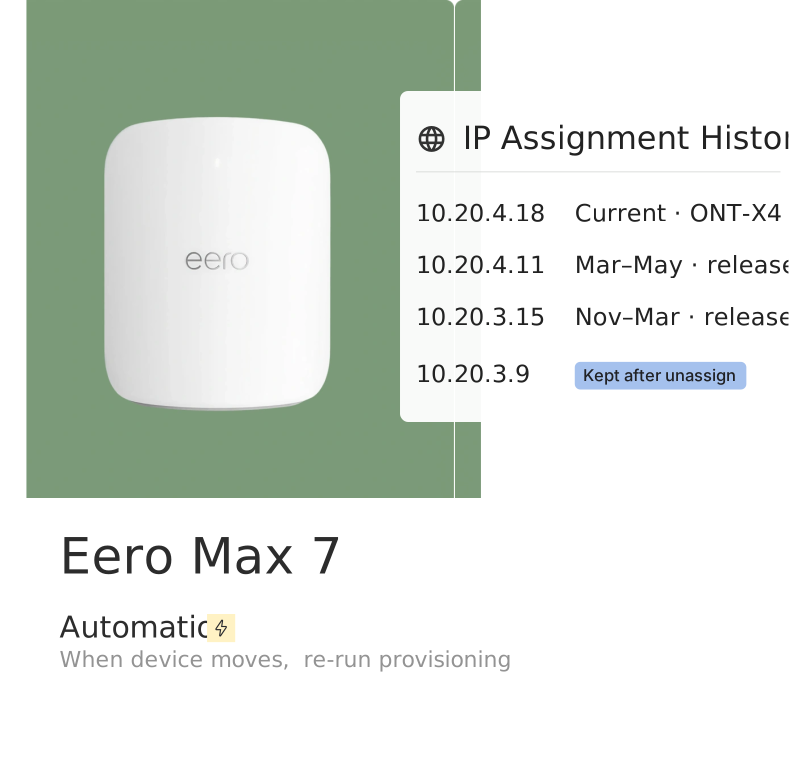
Inventory events connect to the rest of your operation. Linked devices surface on account pages, IP history stays on the account after a device is removed, and any movement can trigger a workflow automatically.
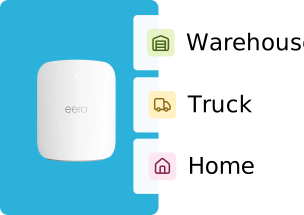
Warehouses, trucks, and homes, all in one view
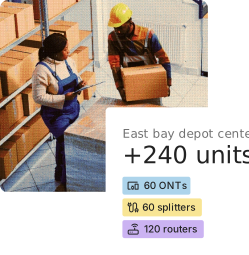
Import a vendor shipment in minutes, not hours
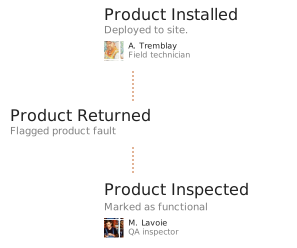
See where every device has been, who touched it, and when
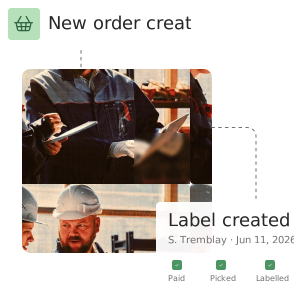
Built-in shipping integrations handle fulfillment from order creation
Your questions answered
Yes. gaiia supports an unlimited number of inventory locations, each with its own sub-locations called zones. CSPs can track hardware across warehouses, technician vehicles, retail counters, and subscriber homes all within a single platform. Every location and zone has its own inventory count and item list, updated in real time as devices move through the operation.
Yes. gaiia accepts bulk CSV imports directly from vendor files containing serial numbers, MAC addresses, or other identifiers. The import validates each row before committing, flagging duplicates, format mismatches, and unrecognized values, so your team can correct errors before anything is added to inventory. Barcode and scanner input is also supported.
Every serialized device in gaiia carries a permanent movement history showing every location it has been, every account it was assigned to, and every team member who moved it. This history is retained indefinitely and never removed when a device is reassigned or returned. CSPs use this audit trail to trace lost equipment, verify returns, and understand the full lifecycle of every CPE in their operation.
gaiia tracks serialized CPE and network equipment common in CSP operations: ONTs, OLTs, cable modems, routers, Wi-Fi access points, set-top boxes, fixed wireless radios, and managed switches. Non-serialized items like cable and patch hardware are tracked by quantity instead. The inventory model supports custom item types and attributes, so operators can cover any equipment that doesn't fit the standard categories.
When a device is returned, operators move it to a designated returns or repair location/zone in gaiia, and the move is recorded in the device's permanent history. gaiia can trigger a workflow automatically when that happens, such as opening an inspection ticket or notifying a technician. Once assessed, the device's condition and status are updated and it can be redeployed from stock.
Yes. Inventory items support custom fields/attributes beyond the standard fields: model, serial number, condition, status, and purchase price, so operators can record things like warranty expiry, asset tags, or vendor-specific identifiers. For equipment that doesn't fit the standard inventory schema at all, gaiia's custom fields and custom objects features let operators define entirely new item types with their own fields and statuses.
Think of gaiia as your telecom toolkit: pick the pieces you need today, add more tomorrow. No heavy lifting required.

.svg)